Jump to:
- How Many Types of Encoders Are There?
- Encoder Types
- Custom Built Encoders for Complex Applications
- Choosing the Right Encoder for Your System
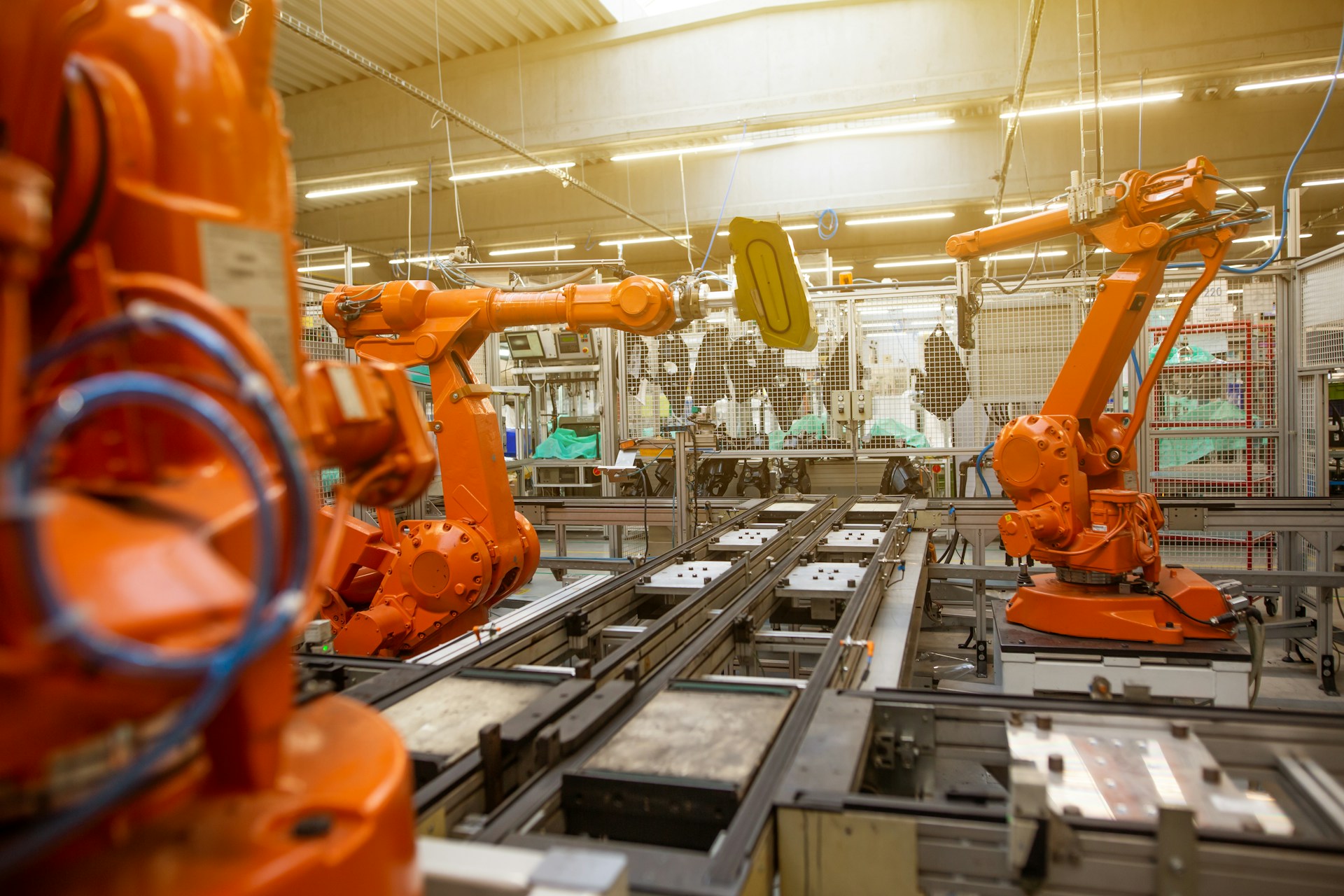
In modern manufacturing and automation, precision and control aren’t just nice to have – they’re essential. If you’re working with a robotic arm on an assembly line or a CNC machine shaping parts to exact tolerances, these systems rely on one critical component: the encoder.
Encoders are essential components in countless industries, from robotics and CNC machining to medical technology and renewable energy. By translating motion into digital signals, they allow machines to understand their own position, speed, and direction.
But here’s the challenge: there are many different types of encoders, and choosing the right one for your application isn’t always straightforward. Do you need a rotary or a linear encoder? Should it be incremental or absolute? And what’s the difference between an optical and a magnetic encoder?
Our encoder guide breaks it all down, helping you navigate the options and match the right component type to your system.
Explore our Range of Encoder Products

How Many Types of Encoders Are There?
The term ‘encoder’ covers a wide range of devices that perform the same essential task: converting mechanical motion into electrical signals. But the way they do this, and what those signals represent, can vary significantly.
Encoders are typically classified based on their output (absolute vs incremental), the type of motion they track (rotary or linear), and the technology they use (optical, magnetic, capacitive, etc.).
Here’s a breakdown of the main types of rotary encoders you’ll come across:
| Type of Encoder | Description |
| Absolute Encoders | Provide a unique digital code for each shaft position. Ideal for safety-critical applications where position must be retained after power loss. |
| Incremental Encoders | Generate pulses to indicate movement but don’t retain position after shutdown. Cost-effective and widely used in general automation. |
| Rotary Encoders | Measure angular or rotational motion. These can be either absolute or incremental, depending on the application. |
| Linear Encoders | Measure straight-line displacement, often found in CNC machines and inspection tools. |
| Magnetic Encoders | Use magnetic fields for sensing, offering robust performance in dirty or wet environments. |
| Optical Encoders | Use light to detect movement. Known for high resolution and precision in clean environments. |
| Capacitive Encoders | Offer a non-contact method of tracking motion with good resistance to contaminants and wear. |
| Angle Encoders | Specialised rotary encoders that provide extremely precise angular position feedback, often used in robotics and gimbal systems. |
Each of these encoder types brings its own advantages, limitations, and best-use scenarios.
Explore Our Encoder Brands
Encoder Types
With so many types of encoders available, knowing how each one works, and where it fits best, is key to making the right choice. Below, we break down the most widely used encoder types to help you identify what’s suitable for your specific application.
1. Absolute Encoders
Absolute encoders provide a unique digital value for every position, meaning they always know their exact location, even after power loss. This makes them ideal for systems where safety, precision, and repeatability matter.
Key Features:
- Delivers absolute position data
- Single-turn and multi-turn variants
- Available in optical, magnetic, and capacitive formats
Applications:
- Robotics
- Medical devices
- Aerospace systems
- Position encoders in heavy-duty machinery
Pros:
✔ Retains position after power loss
✔ High resolution and repeatability
✔ No need for recalibration on startup
Cons:
✘ Higher cost compared to incremental encoders
✘ More complex to install and configure
2. Incremental Encoders
Incremental encoders generate pulses as the shaft moves, allowing you to track movement relative to a starting point. They’re commonly used in systems where relative position, speed, or direction is sufficient.
Key Features:
- Outputs digital pulses (A/B/Z channels)
- Simple integration with control systems
- Common in motor encoder applications
Applications:
- Conveyor systems
- Basic automation setups
- DC motors and stepper motors
- Speed monitoring tasks
Pros:
✔ Cost-effective and widely available
✔ Ideal for speed and direction sensing
✔ High pulse count options for fine resolution
Cons:
✘ Does not retain position after power cycle
✘ Requires homing sequence on startup
Common Variants of Incremental Encoders
To suit different installation requirements and environments, incremental encoders are available in a variety of mechanical configurations. Here are some of the most common types:
- Blind Hollow Shaft Encoders: Designed to mount directly onto a motor shaft without passing all the way through.
Pros: Easy to install in tight spaces
Cons: Limited compatibility with longer shafts
2. Through Hollow Shaft Encoders: Allow a shaft to pass completely through the encoder body.
Pros: Flexible installation, supports larger diameters
Cons: May require secure clamping to prevent slippage
3. Standard Shaft Encoders: Feature a solid shaft that connects to a coupling or gear.
Pros: Well-suited for general-purpose use
Cons: Requires careful shaft alignment
4. Stainless Steel Encoders: Built with stainless steel housings for corrosion resistance.
Pros: Ideal for food, pharma, and marine applications
Cons: Typically heavier and more expensive
5. Linear Scales (Incremental): Used for measuring straight-line movement in precision tools.
Pros: High-resolution feedback for linear displacement
Cons: Must be properly aligned to avoid signal errors
These variations ensure that incremental encoders can be tailored to suit everything from factory-floor automation to sensitive lab equipment, giving engineers the flexibility to find exactly the right match for their setup.
3. Optical Encoders
Optical encoders use a light source and photodetector to read position from a patterned disc. They offer excellent accuracy, making them ideal for applications where resolution and signal clarity are crucial.
Key Features:
- Non-contact sensing
- High signal accuracy
- Options for optical rotary encoders and optical linear encoders
Applications:
- CNC machines
- Printing and labelling equipment
- Measuring systems
Pros:
✔ High resolution and precision
✔ Immune to magnetic interference
✔ Well-documented and widely supported
Cons:
✘ Sensitive to dust, oil, and vibration
✘ May require protective housing in harsh environments
4. Magnetic Encoders
Magnetic encoders rely on a magnet and a magnetic field sensor to determine position. They’re ideal for harsh environments where dust, moisture, or vibration would impact optical encoders.
Key Features:
- Robust and sealed construction
- Works in contaminated or wet environments
- Available in rotary and linear variants
Applications:
- Outdoor automation
- Mobile machinery
- Heavy-duty motor feedback
Pros:
✔ Resistant to dust, water, and vibration
✔ Long-lasting with minimal maintenance
✔ Suitable for rugged industrial use
Cons:
✘ Slightly lower resolution than optical encoders
✘ Magnetic interference can affect accuracy in rare cases
5. Linear Encoders
Unlike rotary types, linear encoders track straight-line displacement. They’re typically found in machines where components move along a fixed axis and where exact position data is essential.
Key Features:
- Measures linear displacement
- Available in optical, magnetic, or capacitive designs
- Offers digital or analogue output signals
Applications:
- CNC machining
- Coordinate measuring machines (CMMs)
- Automated inspection tools
Pros:
✔ High accuracy for linear motion
✔ Multiple sensing technologies available
✔ Supports long travel distances
Cons:
✘ Installation and alignment can be complex
✘ Susceptible to damage without protection
6. Rotary Encoders
Rotary encoders convert angular or rotational motion into electrical signals. They’re one of the most commonly used encoder systems and are available in both incremental and absolute formats.
Key Features:
- Measures shaft rotation
- Can be mounted on motor shafts
- Includes hollow shaft, standard shaft, and through-shaft options
Applications:
- Motors and drives
- Factory automation
- Robotics
Pros:
✔ Versatile with many shaft configurations
✔ Easy to integrate into motion control systems
✔ Available with programmable settings
Cons:
✘ Coupling may be needed for some setups
✘ Requires shaft alignment during installation
7. Capacitive Encoders
Capacitive encoders use variations in capacitance to detect movement. Unlike optical or magnetic types, they’re highly resistant to environmental contaminants and can offer excellent stability over time.
Key Features:
- Uses changes in capacitance to measure movement
- Immune to magnetic and optical interference
- Non-contact design improves durability
Applications:
- Medical instruments
- Cleanroom environments
- Printers and lab equipment
Pros:
✔ Strong resistance to contamination and wear
✔ Long service life
✔ Compact and lightweight
Cons:
✘ Generally lower resolution than optical types
✘ Less common, so availability may vary
8. Angle Encoders
Angle encoders are a specialised form of rotary encoder designed for precise measurement of angular displacement. These are often used where even small variations in position need to be monitored in real time.
Key Features:
- High-resolution angle detection
- Available as absolute or incremental
- Often integrated into servo systems
Applications:
- Robotics joints
- Gimbal systems
- High-precision metrology
Pros:
✔ Excellent angular accuracy
✔ Ideal for complex motion control
✔ Supports real-time feedback
Cons:
✘ Often more expensive due to precision engineering
✘ May require bespoke mounting or calibration
Still unsure about which encoder is best for your application? Talk to our expert team for advice.

Custom Built Encoders for Complex Applications
While off-the-shelf encoders suit many standard setups, some applications require a more specialised approach. That’s where custom-built encoders come into their own, offering tailored functionality, rugged design, and seamless integration into unique systems.
What are Custom Built Encoders?
These are tailor-made feedback devices designed to meet the specific needs of unique or non-standard systems. Whether it’s unusual shaft diameters, combined rotary and linear motion, high-speed data requirements, or severe environmental conditions, a custom encoder can deliver the performance you need.
Why Choose a Special Design Encoder?
- Tailored performance for niche or demanding applications
- Enhanced reliability in harsh or mission-critical conditions
- Full control over mechanical and electrical design elements
- Reduced need for additional adapters or hardware
Popular Uses Include:
- Defence and aerospace systems
- Food-grade machinery and sterile environments
- Medical imaging and diagnostic equipment
- Precision robotics and research applications
- Deep-sea or offshore industrial systems
Custom encoder solutions are especially valuable when standard encoder options can’t provide the precision, durability, or integration you need. Collaborating with an experienced engineering team ensures the final product works flawlessly within your control system – no compromises.
Have a challenging setup or need something truly bespoke? Get a custom encoder built to your specifications.
Explore the World of Encoders
From rotary and linear to absolute and incremental, encoders are essential for delivering the precision, speed, and control that today’s systems rely on. They’re the unsung heroes behind accurate positioning, smooth automation, and efficient performance.
Choosing the right encoder isn’t about ticking boxes; it’s about making sure your system runs at its best. The right fit can reduce downtime, improve reliability, and keep things moving in even the toughest environments.
This guide has walked through the different types of rotary encoders, the features that matter, and how custom-built options can solve more complex challenges. Now it’s time to take the next step and find the encoder solution that’s right for your application.
Looking to complement your encoder solution? Check out our accessories.