
Synchronization controllers
Synchronization controllers provide precise control of master-slave drive systems, ensuring motors and axes run in perfect alignment. These devices are widely used in automation, packaging, and printing processes where exact synchronisation is critical to maintaining quality and efficiency.
We supply Motrona synchronization controllers, designed for high-performance synchronisation in industrial environments. With same-day UK delivery, next-day shipping to Europe and the USA, and minimal lead times worldwide, we make it easy to access the solutions you need.
Explore our full motion controllers range:
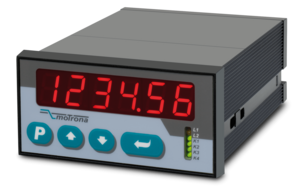
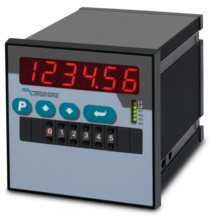
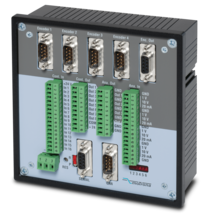
Synchronous Controllers (Electronic Shaft or Gearbox) for Synchronization of Speed, Events, Positions, Print Marks Control
All synchronization controllers shown on this site operate according to the Master- Slave principle. Where the Master can freely move with any motion profile under control of any remote speed reference, the synchronizer will control one or several Slaves to exactly follow the Master motion in terms of position and speed.
The control is based on incremental position feedback by means of encoders on both sides. Many applications just use a measuring wheel with encoder instead of a Master drive. It is possible to preset every speed or gear ratio by means of adjustable impulse scaling factors.
All units can accept marker pulses from the encoders and from remote proximity switches or photocells, to automatically produce the correct position with pitch or cycle related applications.
Motrona synchronous controllers can operate with any kind of speed variable drives (AC inverter, DC, Servo or hydraulic type) that follow to a ±10 V speed reference signal. The extremely fast position control loop provides excellent performance even with highly dynamic applications.
Index SynchronizationSynchronization of product position with machine cycle |
Print Mark SynchronizationSynchronization of punch roll with pre-printed cardboard |
Textile Printing MachineSynchronization of individually driven printing screens |
Drive synchronization
In order to synchronize two conveyor belts the motion controllers work according to the master-follower principle. The movement sequences are passed on from the leading drive (master) to the controller, which controls the following drive. So the second drive follows the specified movement profile exactly and without phase loss. This electronic line shaft is primarily used in highly dynamic production processes.

Where Are Synchronization Controllers Used?
Synchronization controllers are important in applications where drives or axes must work in perfect alignment.
- Printing and labelling – Maintaining precise synchronisation between rollers, cutters, and print heads to ensure consistent print quality and accurate product positioning.
- Packaging machinery – Coordinating sealing, cutting, and feeding operations with continuous material flow, reducing waste and preventing misaligned packaging.
- Rotary processing – Controlling rotating cutters, punches, or dies to deliver clean, repeatable results at high production speeds.
- Tubular bag packing – Ensuring film feed, sealing jaws, and cutting blades remain synchronised, maintaining reliable operation and high-quality packaging output.
- Material handling – Aligning conveyors, drives, and lifts for smooth transfer of products without jams or misfeeds.
- Specialist applications – Used in eccentric shears, winding and laying, and intermittent printing tasks where precise master-slave coordination is required.
If you’re looking for advice on which model you need, contact us, and our team will recommend the most suitable synchronization controller for your requirements.
Benefits of Synchronization Controllers
Using synchronization controllers in industrial systems provides a range of operational benefits, from improved efficiency to long-term reliability.
- Precise drive alignment – Synchronization controllers ensure that master and slave drives run in exact coordination. This level of accuracy reduces product defects, misalignment issues, and wasted material.
- High-speed performance – Designed for fast-moving processes such as printing, packaging, and rotary cutting, these controllers maintain synchronisation even at high line speeds.
- Reduced programming effort – Many units come with preconfigured functions for tasks like cutting, winding, or punching, saving setup time and reducing engineering costs.
- Improved product quality – By keeping drives and axes synchronised, output remains consistent, reducing errors and ensuring finished products meet tight quality standards.
- Easy integration – Motrona controllers connect easily with encoders, sensors, and PLC systems, fitting into existing setups without requiring extensive modifications.
- Reliable long-term operation – Built for demanding industrial environments, synchronization controllers resist vibration, electrical noise, and temperature variation.
Why Choose Encoder Technology for Synchronization Controllers?
At Encoder Technology, we make it simple to source high-quality synchronization controllers that meet the demands of industrial automation. With proven expertise and trusted global supply, we deliver solutions built for performance.
- Fast worldwide delivery – Same-day UK dispatch, with next-day shipping to Europe and the USA. Our logistics network ensures minimal lead times worldwide.
- Over 50 years of experience – Our decades of expertise allow us to recommend the right synchronous controller for applications such as printing, packaging, and rotary processing.
- Comprehensive range – From the BY340 for single-axis control to the MC700 for intermittent printing and punching, our range supports a wide range of applications.
- Minimal lead times – With stock on hand and efficient supply processes, we ensure you get the equipment you need without unnecessary delays.
- Trusted manufacturer – All controllers are supplied by Motrona, a leading brand in motion control technology recognised for durable, high-precision solutions.
Find the Right Synchronization Controller Today
Keep your production processes aligned with a Motrona synchronization controller from Encoder Technology. With fast worldwide delivery, over 50 years of experience, and minimal lead times, we make it easy to source dependable control solutions for industrial automation.
Contact us today to make an enquiry or speak with a specialist, or browse our full collection of motion controllers. You can also explore related categories, including winding controllers, on-the-fly machining motion controllers, and multi-axis motion controllers, to find additional solutions for your project.
Frequently Asked Questions
What is a synchronization controller?
A synchronization controller manages master-slave drive systems, keeping motors and axes running in perfect alignment for precise, repeatable performance.
What’s the difference between a synchronization controller and a standard motion controller?
A standard controller may require programming for multiple tasks, while a synchronous controller is optimised for maintaining drive alignment in specific applications such as cutting, printing, or packaging.
Which industries use synchronization controllers?
They are commonly used in packaging, printing, rotary processing, tubular bag packing, and material handling, where exact coordination is essential.
Do Motrona synchronization controllers support multi-axis setups?
Yes. Motrona offers models for both single-axis synchronisation and multi-axis master-slave control, depending on application requirements.
Can these controllers integrate with PLC systems?
Yes. Synchronization controllers are designed to connect with encoders, sensors, and PLCs, ensuring straightforward integration into existing automation systems.
Are synchronization controllers suitable for high-speed processes?
Yes. These units are designed to maintain precise alignment even at high production speeds, making them ideal for fast-moving operations like printing and rotary cutting.
